Aboutcontact
ABOUT
Contact
radio times / identity

When I first arrived at Radio Times I was tasked by the creative director with undertaking a comprehensive review of the brand, its positioning in the market, and how the many touchpoints and products within its family interacted with each other. In short, I found that, for the premium brand in the space whose price point was more than twice that of many of its competitors, visually there wasn't much distinction. There was also no cohesive strategy for the brand's application across the portfolio, which in practice was ad hoc and inconsistent. The creative in this section formed part of a proposal to revamp the identity in order to better position it for the future, and to formalise the relationships with all of the sub-brands. Unfortunately, it was ultimately decided that a rebrand wasn't desirable at that time, and the project was shelved.

More info

This new logo/masthead for Radio Times plays on its strong heritage and the serif designs of its heyday, while taking into account current commercial considerations that rules out italicisation. It also sets it in contrast to its competitors as the superior, quality product that justifies its higher price point in the marketplace.

logomark redesign / brand architecture / brand strategy

More info

The new brandmark as it would appear as a masthead on the cover of the print magazine, with a new accompanying brand typeface.

logomark redesign / brand strategy

virgin trains / campaign

Ahead of the bid to renew their operating franchise,Virgin Trains were looking to engage staff with a feel-good campaign that also promoted their high customer satisfaction scores. After engaging staff in focus groups to determine their attitudes and feelings it became apparent that there was an inherent pride felt in being a part of the Virgin brand. When asked to explain why they felt the service they offered was better than other operators on more than one occasion the simple reply came back, ‘Well, we’re Virgin. It’s what we do’. The phrase became the backbone of the campaign. Working with illustrator and typographer Lord Dunsby, aka Stephen Millington, I developed an identity that felt a bit different – just like the staff – and a set of characters that embodied their warm hospitality. Post-campaign feedback saw levels of employee engagement and positivity measurably rise across the business.

More info

The feel-good slogan, identity, and set of illustrated characters rolled out as part of a wide-ranging campaign to incentivise and engage Virgin Trains employees, in the build up to their bid to retain the West Coast rail franchise. Illustration: Lord Dunsby

logomark design / campaign strategy

More info

The identity and characters were rolled out across a range of communications, including this poster depicting an upcoming series of events leading up to the London Olympics and the submission of the company's rail franchise bid. Illustration: Lord Dunsby

campaign strategy / poster design

More info

In addition to keeping staff informed of the company's upcoming strategic goals and intents, the feel-good campaign also focussed on staff achievements and why their service was superior to rival franchises. These posters showcased positive customer feedback. Illustration: Lord Dunsby

campaign strategy / poster design

National Business Awards / identity

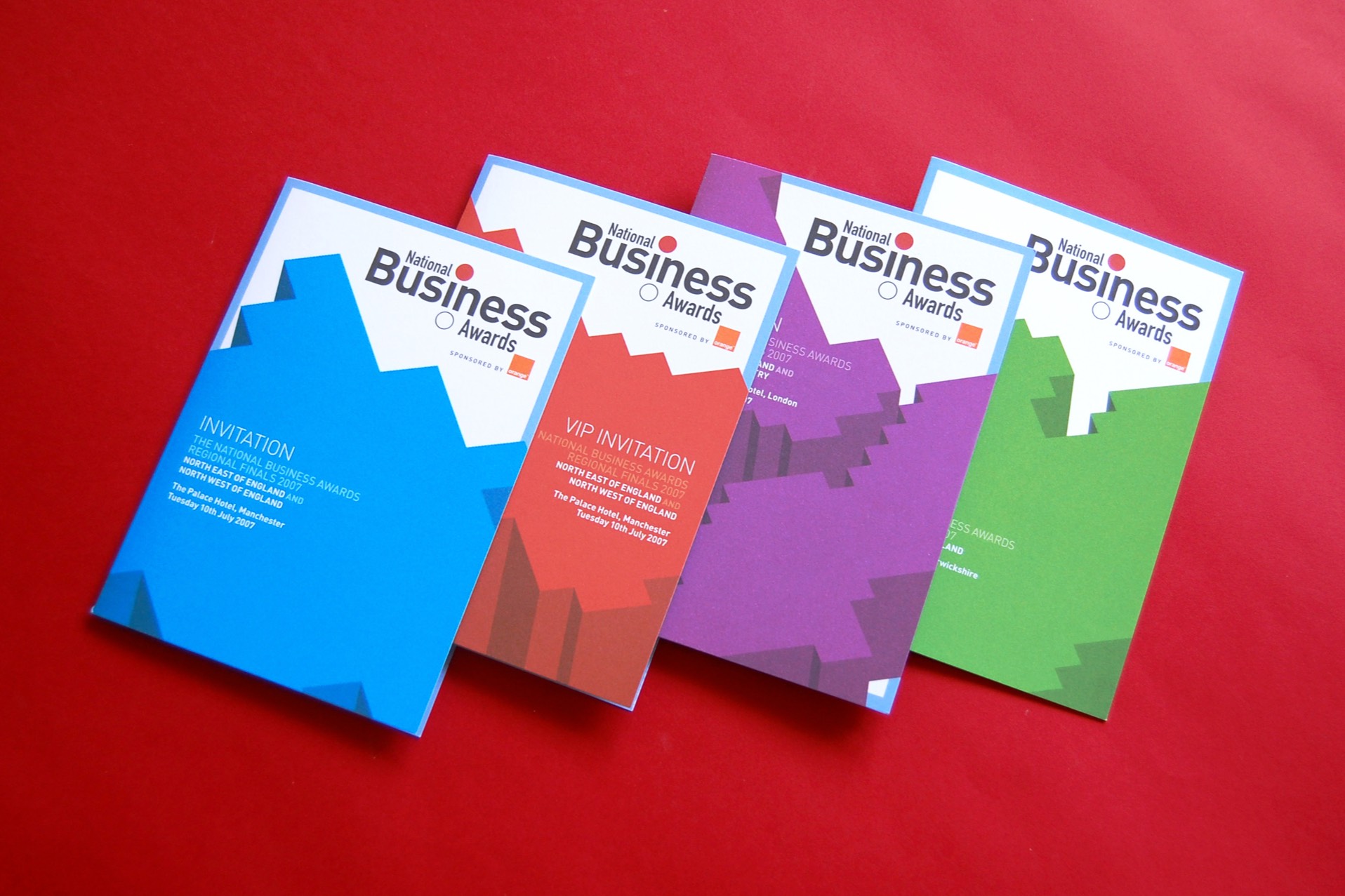
The organisers of The National Business Awards were looking for a new approach. A review of the previous use of its distinctive trophy as the visual representation of the brand had determined that it was counter-productive and devalued its prestige. People were also unable to distinguish between the regional awards and the more eminent national honours. With no budget available, the artwork needed to be self-generated. The solution was a visual play on the idea that successful businesses are the building blocks upon which the country is built. The stylised, modular map of England  (Scotland had a separate awards) – representing the five awards regions – was not only a bold and colourful departure but could be deconstructed and reconstructed as necessary to form flexible and unique identities for each region. And when it was time for the national event, the regions could be brought together into a single symbolic shape, representing the whole country.

More info

The motif for the National Business Awards utilised a stylised modular map of the England broken up into the five areas that represented the regional events that began the annual awards cycle that would culminate in the national competition.

logomark design / campaign identity

More info

The visual would be used in its complete form for general nationwide communications. But the modular nature of the identity meant that it could be deconstructed into its regional components for the various materials produced for separate regional events. Cropping into the outlines in different ways allowed for variety in their presentation, and also for them to be used as abstract shapes on internal editorial layouts .

visual identity/ editorial design

More info

Once the regional awards had taken place the campaign for entries to the national event would launch. To represent this transition the modular regional map would unify into a single shape representing the country as a whole.

logomark design / campaign identity

homeeditorialDigitalimagesprojectsCoversbrandingpitches